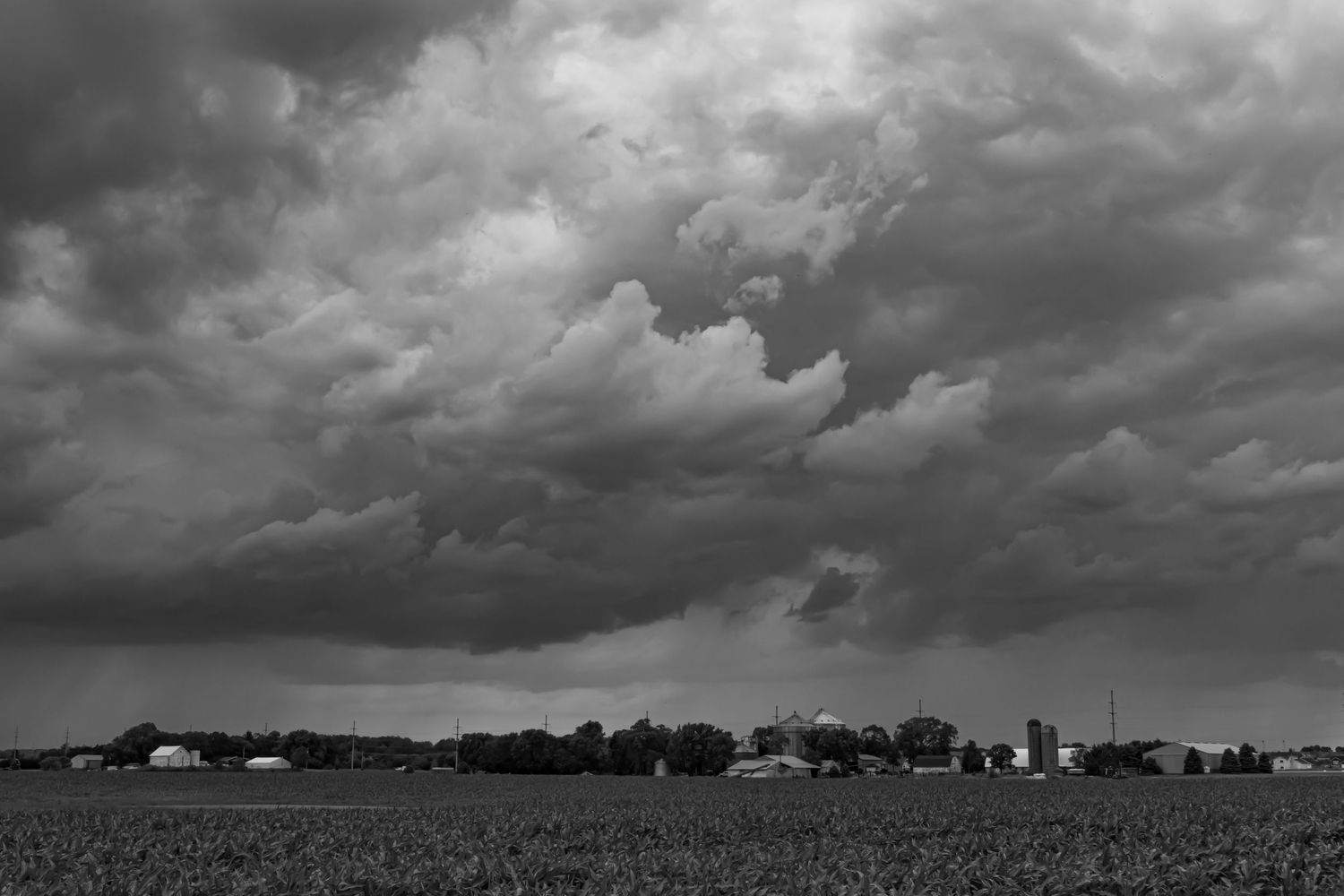
Camera's and all my equipment
I have been shooting with Canon ever since the change over from film cameras to digital cameras, and of course I still have all my old film cameras as I just can't let them go. Some of my equipment I purchased new, and some I've purchased used from some great reseller's. B&H Photo out of New York has been the one I have dealt with the most, and they are amazing! I am looking to purchase a "new to me" used body so I've also been looking at MPB Photo where a family member has being doing business with and raves about them too.
I have included links to most of my equipment incase you see something you like and want to add it to your gear too.
Camera "Body"
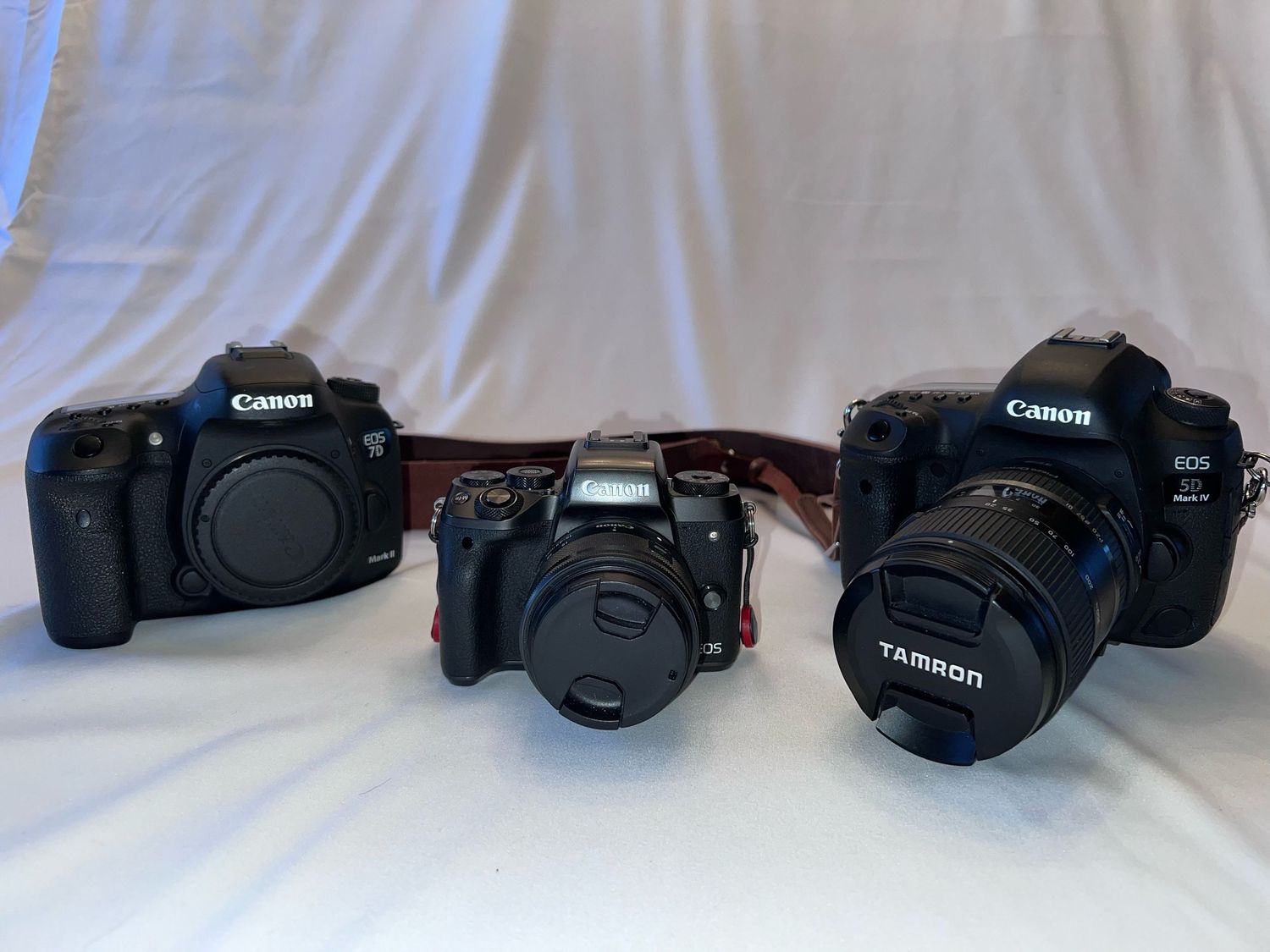
What it a "camera body"? It's just the camera without the lens, but it's the 2nd most important part, the lens being the first. These are the camera bodies that I shoot with, from left to right;
Canon EOS 7D Mark II (DSLR): This was my long time staple when I purchased it in 2017 (replacing a Canon Rebel T5i) and it's a great camera! I still shoot with it, but it's now my primary camera for underwater photography that I am just starting to try out. Not ocean kind of photos, but shoreline, waves, shallow (less than 20 feet) and falls where I'm in the water and the camera is getting wet. I didn't take a photo of it, but I use an underwater housing I purchased from Aqua Tech and it's great! There is one photo on this site that I used it with, can you find it?
Canon EOS M5 (Mirrorless): This was a very strategic purchase. I have always loved the way photos with "star trails" in them look! Since I spend so much time out shooting the night sky, or waiting for the Northern Lights to materialize I figured I could set up a 2nd camera to just take one photo after the next for hours if I wanted. This camera is perfect for it!
Canon EOS 5D Mark IV (DSLR): This is my all around camera that I take with me everywhere. Not quite the top of the line for Canon, but pretty close!! It's the last of the "mirrored" camera's, and I purchased it in 2020. Sharp clear photos and a large format "full frame" sensor. The photos I take with this are detailed enough that I could make billboards out of them!
Camera Lenses
The lens, or the "glass" really, makes all the difference in the world! It's worth it to spend a little more here to ensure you get the sharpest and cleanest photos you can. You don't have to break the bank, but don't grab the cheapest either if you are thinking of using your photos for more than just small prints. Buying the manufacture lens, or a reputable aftermarket company, is usually the best way to go.
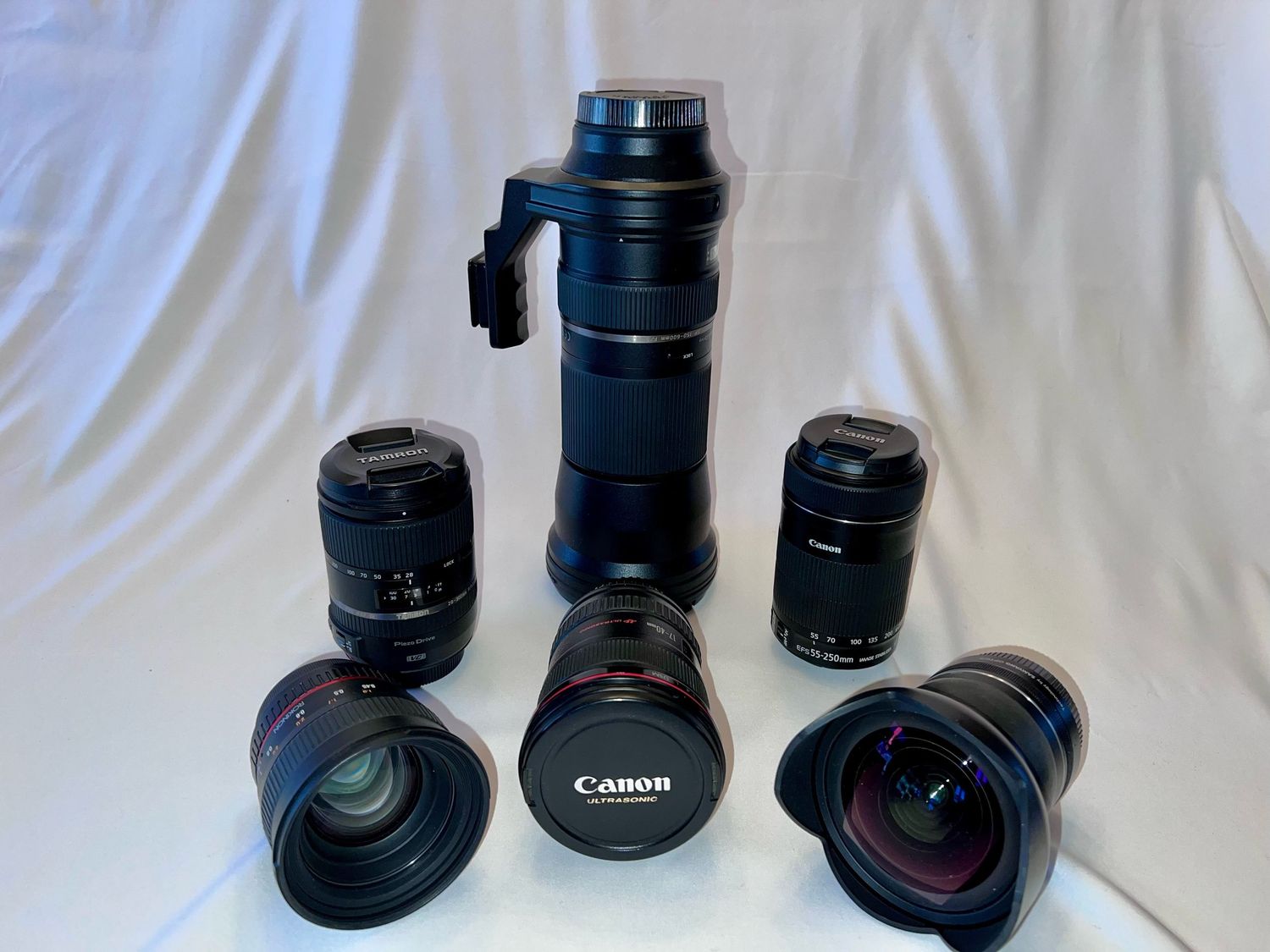
These are the lens that I use, starting left to right, and back row first.
Tamaron 28-300mm: This is my go to lens, I shoot with it more than any other lens I have. Being able to go from a relative wide angle to a zoom without having to switch out the lens is great!
Tamaron 150-600mm Zoom: I don't use this one too often, but I do use it for shooting wildlife, or getting sharp photos of the moon! That extra "handle" is actually the mount for the lens onto your tripod since it weighs more than the camera.
Canon 55-250mm: This is another good all-around lens. I got this one with my original Canon T5i that came as a "boxed kit" where you get the lens with the camera. It's a great way to get into photography without spending a lot of money. I use it a lot with the M5 body.
Rokinon Fixed 50mm: I use this one more for a "close" appearance for Milky Way photos where I want the image to fill the photo to a higher degree.
Canon 17-40mm: This was a very specific lens I got, as it's about the only one that will fit inside the underwater housing that has a little zoom to it.
Rokinon Fixed 14mm: This is my go to for pretty much anything night sky. All of my Milky Way photos are taken with this one. I love it!
Camera Bag and Tripod
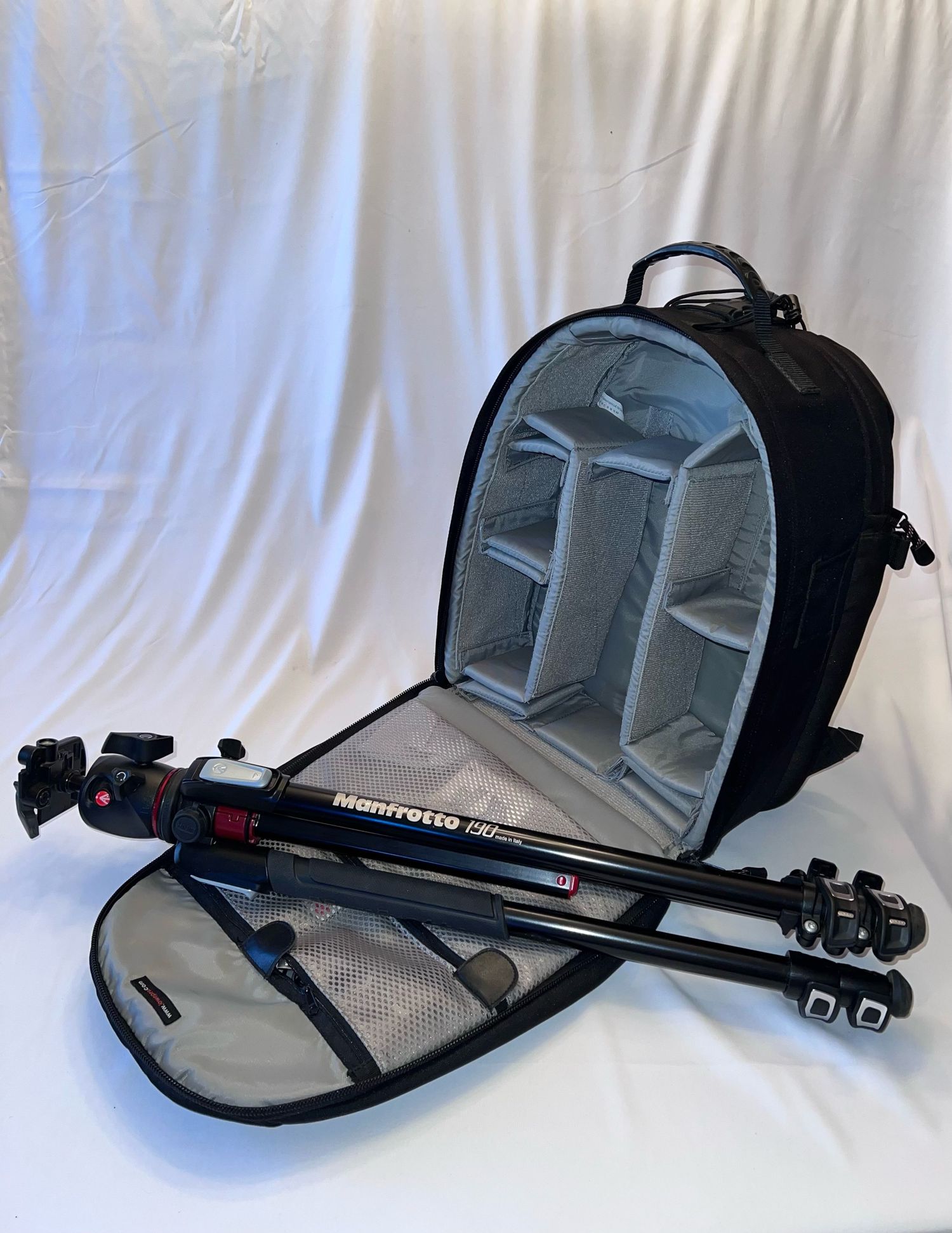
Two of the more important questions when it comes to photography, how will you carry your gear, and what are you going to put it on when you need it?
Manfrotto Tripod MK190XPRO 3 Aluminum Tripod with Ball Head: Phew, that's a mouthful! I use this tripod a ton! Taking night sky photos you need something strong and sturdy that keeps your camera setup from vibrating when you're exposing for up to 30 seconds. Also, for taking my "timed" photos of rivers (where you can see the flow of the water) and falls, as the same need exists in these photos since you are exposing up to 15 seconds or longer to get the water flow like silk. The Ball Head comes in super handy as well so I can move the actual camera around, including going from horizontal to vertical shots, without having to reposition everything.
Lowepro Camera/Gear Backpack: This bag has been with me for 15+ years and has gone everywhere! Its awesome! I can put in 2 bodies, 3 or 4 lenses, all of my little accessories and it has a full rain cover for the not so great days I'm out taking shots. It also has a holder so I can attach my tripod to it when I'm hiking into the woods. I do have a small "travel" pack that I use when I just have to "run" someplace and I know what setup I need so I don't have to take the bigger backpack.
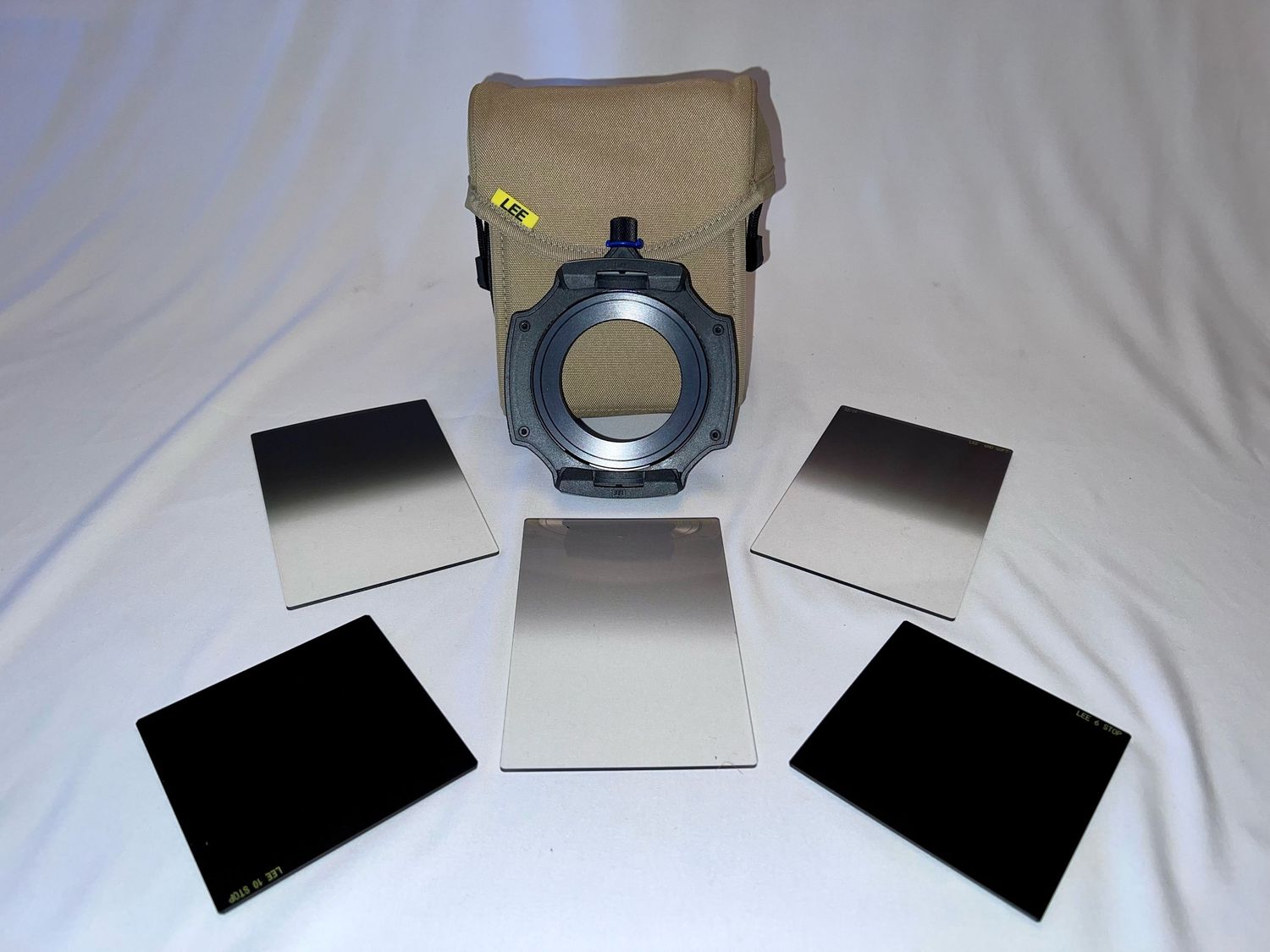
Lens Filters
Another essential for photography! Or at least something that you need to consider when taking shots in bright daylight.
Lee Filter System: The Lee Filter System allows you to filter out the sun (the 3 that look darker at the top and clear at the bottom) just like sunglasses do. Each one has a different effect on the way the sky will look in the photo. The 2 that are very dark are the ones I use when taking timed photos of rivers and falls in daylight. These are so dark that I can have the lens "open", in full sunlight, for almost 30 seconds and have the photo look normal. The mount (in the center top of the photo leaning up against the Lee Filter holder) screws onto your lens, then the filters slide into slots in front of that. You can add several filters to it so you get the desired look on your photo. I got this system several years back and I can't tell you how often I use them!
There are a ton of options when it comes to what filter you want, depending on what you are going to use it for. Some are gradual filtering like you see in the photo above, and some can be "rotated" for different effects on the way the water, or sky, will look in your photo.
Camera Extras
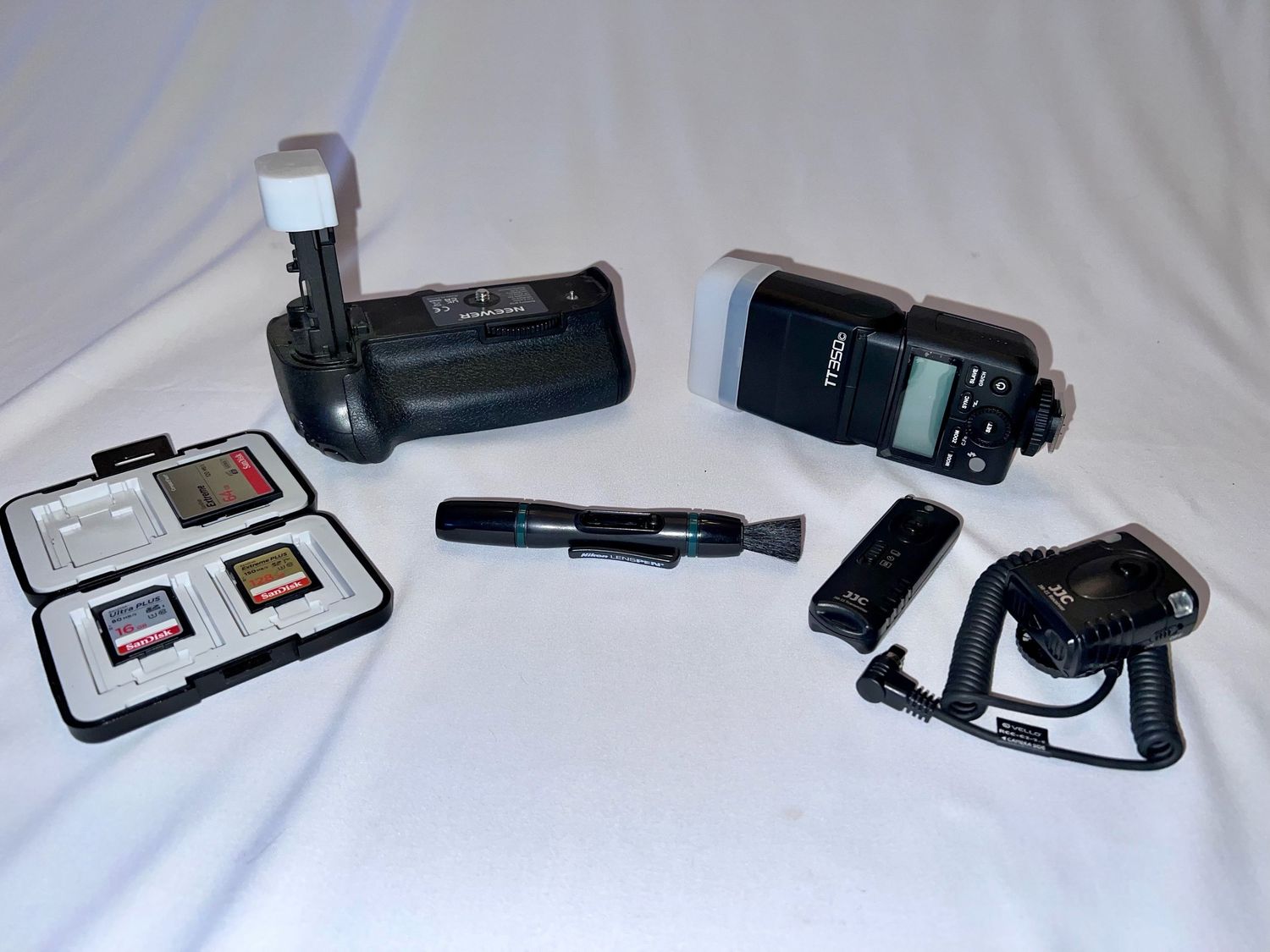
All the things you tend to amass (and this is not all of it) in photography is astounding to say the least. I think I have boxes of things I've used over the years, and I keep adding to it too! The items I put here are ones that I tend to use almost all the time, so I felt that these would be the best. Starting on the left and making a "M" of the items.
Bower SCS Series Memory Card Holder: I have 2 of these, one in my bag and one in my truck as there have been times I've arrived at a location and forgot to put the memory card back into the camera! It holds up to 4 cards of various size, it's a hard shell with foam inserts for the cards. And speaking of cards, it not just about the GB of storage on the card, but the MB/s (megabytes per second) that it has. The higher that number is, the faster it records your images when shooting fast paced things. Currently I've been using ScanDisc 128GB with 180mb/s for speed.
Neewer Battery Grip: About the only time I use this is when I know I will be taking tons of photos, and not be close to a way to recharge the battery. It holds 2 batteries in the base so you get twice as long on location.
Nikon Lens Pen: Great little item to have (and a great "stocking stuffer" for your favorite photographer! It's a quick easy way to clean your len before use. One end is like a microfiber disc and the other is a fine brush that extends to get stubborn dust or dirt off the lens.
Godox TT350c Flash: Since most new camera bodies do not include a built-in flash you'll need to get one. Godox is easy to use, and can be set up "remotely" off the camera as needed, a great little trick when shooting in lower light or indoors.
JJC Remote Trigger: This is a must for night sky photography! It's a two piece unit, one part mounts to the "flash" mount on the camera, then attach the cord to the correct port on the camera body. The 2nd part is a handheld remote control. You can be up to 50 feet away from your camera and trigger it for a picture. I can't tell you how many winter nights I've set this up, and then sat in my warm truck taking photos! It's a game changer for nighttime winter photography!